Who Goes First?

No time to read a long-winded BLOnG? Welcome to the Three-Second-Stop mini-Blog.

Today’s Three Seconds: Knowing Your Right-Of-Way

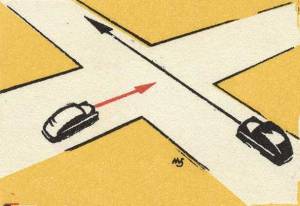
right-of-way3 Second StopAn intersection without a stop or yield sign could present a little confusion. Make sure to slow down and be prepared to stop. Yield to vehicles already in the intersection or entering it in front of you. If you and another driver reach the intersection at the same time, yield if the car is on your right.

Go Speed Racer… No!

Risky Business

In 2012 roughly 92 people died in motor vehicle crashes each day according to the National Highway Traffic Safety Administration. 30% of these deaths involved speed-related traffic crashes.

Speeding is generally viewed as dangerous driving behavior, but this doesn’t seem to keep 75% of drivers from speeding regularly. The most common forms of speeding are driving too fast for the conditions, driving above the posted speed limit and racing. For every 10 mph over 50 mph that a vehicle travels, the chance of death or serious injury doubles.Speeding Tickets

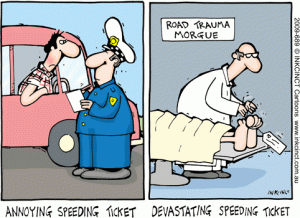
Most of the time, we are speeding to save time. The truth is we don’t save as much time as we would like to think. If you were traveling at 65 mph over 20 miles instead of 55 mph you would save only about three and a half minutes! And if speeding doesn’t lead to a collision, you may still end up with ticket which is a whole other set of problems to deal with.

So, next time you’re tempted to put the pedal to the medal, ask yourself… “Is it worth it?”

Bridge the Gap

Can You Name These Memorable Bridges? Part II

Bridges are wonders of engineering and architecture. They are together beautiful and functional. Can you name any of these bridges from around the world, both near and far?
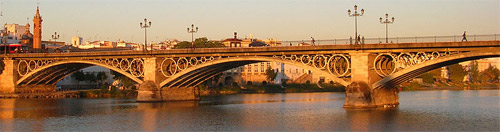
Pont_de_Triana
FOUR: Construction on this bridge was completed in 1852 making it the oldest iron bridge maintained in Spain. The design was similar to the Paris Carrousel Bridge featured in a painting by Van Gogh in 1886. Commonly referred to as Puente de Triana, it is actually named after the reigning queen at the time of its creation.
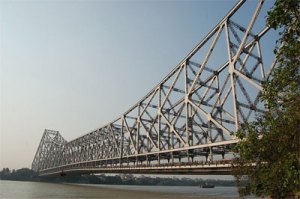

Howrah_Bridge_Kolkota
THREE: This bridge is found in West Bengal, India and has become a symbol of Kolkata (Calcutta). Constructed from 26,500 tons of steel the entire structure is erected using rivets. The cantilever and suspended span bridge was renamed Rabindra Setu in 1965, but is still widely known as…
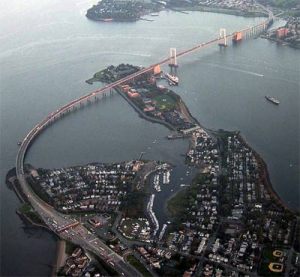

Throgs_Neck_Bridge
TWO: This suspension bridge turned 50 years old in 2011 and was built to alleviate some of the traffic on the Whitestone Bridge. Located in New York City, its total length is 2,910 feet with the longest span at 1,800 feet.
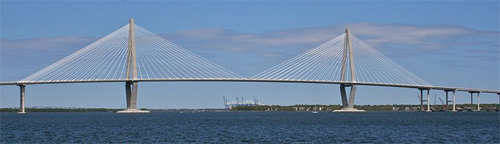


Arthur_Ravenel_Bridge
ONE: Located in South Carolina, this cable-stayed bridge replaced two outdated cantilever truss bridges. Mindful of the locale’s history, the bridge was engineered to endure hurricane force winds and earthquakes as well as potential shipping accidents.


Check out: London Bridge Is Falling Down… Can You Name These Memorable Bridges? Part I

4) Puente de Isabel II 3) The Howrah Bridge 2) Throgs Neck Bridge 
1) The Arthur Ravenel Jr. Bridge 
Driving with ABS

No time to read a long-winded BLOnG? Welcome to the Three-Second-Stop mini-Blog.

Today’s Three Seconds: Anti-Lock Brakes (ABS)

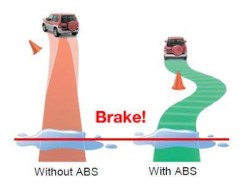
How does ABS break system work3 Second StopYour car’s ABS helps you stop shorter and maintain steering control while braking, especially on slippery surfaces. The key to proper ABS success is driver education.
In an emergency, or ‘panic stop,’ you should press your brake pedal once, holding it firmly. Never pump the brakes — Anti-lock brakes can sense when your wheels are locked and electronically pump your brakes 10 times faster than you — This is what causes the vibration in your brake pedal and the ratcheting noise when the ABS is engaged. Whenever you feel the brake pedal pulsing, press even harder.

Spring Break with a Plan

Fun, Sun and Safety

For many families it is Spring Break which means it’s time for a family vacation. Here are a few tips to make your travel plans a little safer and less stressful.

road-trip

  • Get a Tune Up. Make sure your car is in good working order before hitting the road.
  • Pack Thoughtfully. Keep safety and economic benefits in mind when you are loading up the family van. Also, prepare for the unexpected by packing an auto safety travel kit with useful items in the event you run into a problem.
  • Research Your Route. Find out before you leave what the road and weather conditions will be like.
  • Don’t Be In a Rush. Allow enough time to get to your destination safely. Planning ahead will help avoid aggressive driving and road rage.
  • Stay Connected. Let a friend or other family member know your travel plans.

All that is left to do now is sit back and enjoy the ride!

Proceed with Caution: Driving in the Rain

No time to read a long-winded BLOnG? Welcome to the Three-Second-Stop mini-Blog.

Today’s Three Seconds: Rain and Wet Roads

s6rain2_web3 Second StopHere are some quick tips for driving in wet weather:

  • Slow down.
  • Use your low-beams headlights.
  • Drive in the tracks left by the vehicle ahead of you.
  • Be as smooth as possible.
  • Leave extra space to brake.
  • Slow down through deep water.

It takes the average car twice as long to stop on a wet road as on a dry road!

The Golden Rule of Driving

Courtesy is Key

5662967723_c2aec1ed96_o

You know that Golden Rule, “Treat others how you would like to be treated?”  Well, that applies to driving too.  Be a courteous driver just as you would like other drivers to be courteous to you.  When you lead by example with your patience and mindfulness, you can actually reduce your OWN frustration behind the wheel, as well as other drivers’ frustration.  Follow TrafficSchool.com’s tips to maintain the level of courtesy necessary to drive safely and not upset other drivers:   

  • STAY OFF YOUR PHONE!  Unless it is an emergency.
  • If you prefer to drive at a slower pace, move into the right lane.  If it’s a single lane road, look for a turnout where you can pull over so faster moving vehicles can pass you.
  • When traveling with kids, make sure you have plenty of items or toys to keep them occupied so you can focus on driving.
  • Don’t weave in and out of traffic lanes, and when you are changing lanes, always use your turn signal.
  • Avoid following other drivers too closely or “tailgating.”

Simple, right?  You don’t want to be part of a chain reaction of bad driving because you’re taking your frustration out on the road and on other drivers.  

Be the start of a courteous chain reaction instead; the Golden Rule is called “Golden” for a reason!  Go for gold!

Do you Smog?

The What, Why & How

ozone-pollution-smog

What Is It? Smog is a type of air pollution, originally used to describe the smoke and fog created by the burning of large amounts of coal within a city.  Modern smog refers to a type of air pollution caused by traffic emissions – such as from trucks, buses, and automobiles.  The smog in Los Angeles is an example of such air pollution.

Why Do Smog Tests?  The smog check makes sure vehicles meet the government’s requirements for environmental air quality and ensures cars with excessive emissions are repaired to reduce air pollution.  Smog tests are required in many states and counties – be sure to check your specific area’s requirements.

How It Works:  A smog test is performed by putting the vehicle on a platform where the front or back wheels drop down on a spinning tube.  This is so that your car can be accelerated without moving, while a sensor placed inside the exhaust pipe measures the exhaust emitted.  The sensor communicates this information to a computer, thereby displaying whether the vehicle passes the government’s standards.

Tips to Pass Your Smog Test:

  • Make sure your exhaust system has no holes or leaks.  You can fail the smog test if your car emissions are too low as well.
  • Replace any old hoses, air filters, and wires and check your oil.
  • A warm engine is more likely to pass the smog test than a cold one.  Take a 20 minute drive prior to your smog test.

Getting your vehicle smog tested can be a hassle and an added expense, but the benefits far outweigh the cost to keep our air and our planet clean.

Super Safety Tips for a Super Super Bowl Sunday

What’s your game plan?

super_bowl_2014

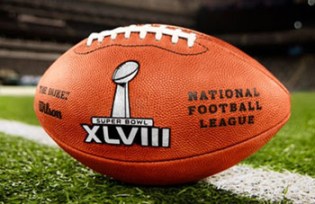
Super Bowl Sunday is right around the corner … do you have a game plan?  As Denver and Seattle go head to head, don’t forget to use yours!  Whether you are having friends over or you’re watching the game at a friend’s house or sports bar, there are safety precautions you can take to make sure everyone “arrives alive” when they go home.

If you are having friends over, here are simple tips to be a responsible host:

  • Before the game even starts, check that everyone has a designated sober driver to get home
  • Provide protein-rich foods like meats and cheeses or finger sandwiches; salty snacks tend to make people want to drink more
  • There should ALWAYS be non-alcoholic beverages available
  • Stop serving alcoholic beverages between the 3rd and 4th quarter (just like NFL stadiums!)

If you are spending game day at a friend’s place, a bar, or a restaurant, these tips should be part of your Game Day Game Plan:

  • Have a designated sober driver before you leave home (or be one yourself)
  • Be mindful of drinking on an empty stomach and eat foods high in protein
  • Pace yourself!  Take breaks and alternate with non-alcoholic drinks
  • Be a true friend by keeping an eye on your friends and make sure no one drives if they’re intoxicated

No matter who you’re cheering for, following these safety tips are a game day WIN!


FM Radio More Repetitive Than Ever

…Fearing Listeners Will Tune Out Unfamiliar Tunes

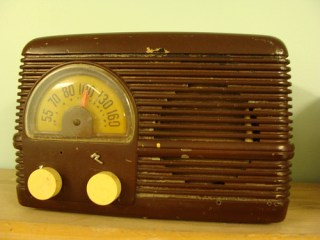
5203892541_e7a7aa08ea

Music services such as Pandora, Spotify, iTunes, and Sirius XM Radio have developed quite a following with listeners in the last several years.  One of the greatest draws for using such services is the ability to choose from a large variety of songs as well as having numerous opportunities available to “discover” new music.

You would think to keep up with this novelty FM radio would try to emulate these advantages in their music offerings.  However, FM radio has gone in the exact opposite direction of its more digital counterparts.  Why?  A recent article published by The Wall Street Journal explains that traditional broadcasters have been able to increase listenership by narrowing the variety of songs that they play.  According to the article, this strategy comes from growing research suggesting what radio programmers have long suspected – “listeners tend to stay tuned when they hear a familiar song, and tune out when they hear music they don’t recognize.”

The Wall Street Journal cites statistics from Mediabase for “most played songs,” showing that last year’s (2013) top songs were played almost TWICE as much on the radio compared to a decade prior (2003).  Between emerging data and the increasingly long list of music options to choose from, FM radio stations are clinging onto this strategy tightly, even extending the amount of time artists must wait to introduce new songs.

FM Radio is still the most widely used American listening system, so even though its policies may be negatively affecting musical artists, it certainly is distinguishing itself from digital alternatives, securing a unique and specific (yet repetitive) spot in listeners’ ears.