Go Speed Racer… No!

Risky Business

In 2012 roughly 92 people died in motor vehicle crashes each day according to the National Highway Traffic Safety Administration. 30% of these deaths involved speed-related traffic crashes.

Speeding is generally viewed as dangerous driving behavior, but this doesn’t seem to keep 75% of drivers from speeding regularly. The most common forms of speeding are driving too fast for the conditions, driving above the posted speed limit and racing. For every 10 mph over 50 mph that a vehicle travels, the chance of death or serious injury doubles.Speeding Tickets

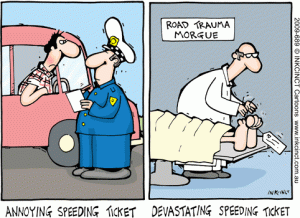
Most of the time, we are speeding to save time. The truth is we don’t save as much time as we would like to think. If you were traveling at 65 mph over 20 miles instead of 55 mph you would save only about three and a half minutes! And if speeding doesn’t lead to a collision, you may still end up with ticket which is a whole other set of problems to deal with.

So, next time you’re tempted to put the pedal to the medal, ask yourself… “Is it worth it?”

The Golden Rule of Driving

Courtesy is Key

5662967723_c2aec1ed96_o

You know that Golden Rule, “Treat others how you would like to be treated?”  Well, that applies to driving too.  Be a courteous driver just as you would like other drivers to be courteous to you.  When you lead by example with your patience and mindfulness, you can actually reduce your OWN frustration behind the wheel, as well as other drivers’ frustration.  Follow TrafficSchool.com’s tips to maintain the level of courtesy necessary to drive safely and not upset other drivers:   

  • STAY OFF YOUR PHONE!  Unless it is an emergency.
  • If you prefer to drive at a slower pace, move into the right lane.  If it’s a single lane road, look for a turnout where you can pull over so faster moving vehicles can pass you.
  • When traveling with kids, make sure you have plenty of items or toys to keep them occupied so you can focus on driving.
  • Don’t weave in and out of traffic lanes, and when you are changing lanes, always use your turn signal.
  • Avoid following other drivers too closely or “tailgating.”

Simple, right?  You don’t want to be part of a chain reaction of bad driving because you’re taking your frustration out on the road and on other drivers.  

Be the start of a courteous chain reaction instead; the Golden Rule is called “Golden” for a reason!  Go for gold!

If You Must …

Inclement Winter Weather Driving

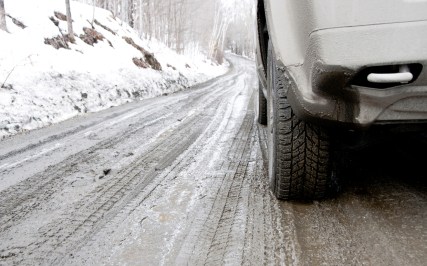
Dirt covered SUV on a muddy road

Increased risk for accidents is a given during inclement weather conditions.  That’s why the best advice when dealing with snow is to avoid driving altogether.  If you must drive in the snow, extra safety precautions are necessary.

If you live in an area that gets snowy weather, you should always carry chains in your vehicle and put them on your tires prior to driving in snow.  Also steer clear of the shoulder of the road.  Snow can build up the most here, and the shoulder is for emergency situations.

Heavy snow can make it difficult to see lane markings, so try to position your vehicle to stay in line with the tracks of other vehicles ahead of you.  Speed must be decreased and following distance should be doubled to at least eight to ten seconds.  Accelerate and brake very slowly.  Turn on your low beam headlights to make yourself more visible to other drivers.

If you are having difficulty with visibility, such as during a white out, pull into a safe parking area if possible.  Do NOT stop on the traveled portion of the road.

It’s true, blustery winter weather can be stressful.  To best cope, be prepared ahead of time, and stay alert, calm, and patient.

Halloween Safety

How Drivers Can Prepare

casper3All motorists need to be EXTRA alert today.  Halloween ranks the highest for the amount of child pedestrian deaths and reports some of the highest holiday- related DUIs and pedestrian deaths overall.  National Safety Council and Trafficschool.com have some quick safety tips for motorists:

Keep an eye out for children who may be darting out from between parked cars and walking on roadways, medians and curbs.  Children can move in unpredictable ways, especially when you add in the excitement of trick-or-treating and overflowing amounts of candy.  Sometimes they are wearing dark clothing or costumes that make them even more difficult to spot later in the evening when it’s darker outside, so drive cautiously.  Always enter and exit driveways and alleys with extra care, and never use your cell phone when you are operating a vehicle.  It’s also a good idea for teens simply not to drive on Halloween night, because there are too many hazards and distractions for inexperienced drivers.  And if you are going to be consuming alcohol, make sure you have a designated driver before you even go out.  Jot down a cab company’s phone number too, and bring it with you, just in case.

Being prepared and informed will help ensure your Halloween is full of fun and not regrets.  So take note, and be sure to remind all your friends and family on how they can have a safe and happy Halloween!

Extend the Life of Your Car

Regular Maintenance is Key

car_banner
Keeping your vehicle well-maintained is important to preserve its longevity, and you don’t have to splurge on a new car every few year to do so either. By following these simple tips, you’ll keep you car running as if it was new.

Change Filters
It’s a given that you should get your car’s oil changed on a regular basis, but a lot of drivers often forget about the other fluids and filters, such as the air filter which helps the engine last longer.

Check Cooling Systems
Maintaining the proper coolant level is extremely important. A failed cooling system and/or hoses could result in a futile engine.

Pressure Check
Most people don’t pay much attention to their tires. But, the wrong pressure not only ruins your tires, which is bad for the vehicle all together, but it could also affect your fuel economy and present major safety issues.

Pay Attention To The Gauges
As discussed in a previous blog, most drivers ignore warning signs. They are your indicators when something is wrong with your oil pressure, cooling system or in newer vehicles, your tire pressure.

Get Regular Checkups
Find a repair shop and a good mechanic you trust! It’s important that your car gets regular checkups to maintain its overall makeup and to prevent future problems from occurring.

Dangers of the Road

Dealing With an Aggressive Driver

beware

Aggressive drivers! We’ve all dealt with them at least one time in our lives, if not on a daily basis. They’re the ones belligerently weaving in and out of traffic, beeping the horn like mad men and women, and screaming obscenities at the motorists who are actually doing the posted speed limit. Unfortunately, aggressive drivers are everywhere, so how do you deal with them?

Simple. Do your best to stay out of their way. An aggressive driver is a dangerous driver. The last thing you want to do is outsmart them by mimicking the same erratic behavior they are displaying. Not only is that jeopardizing your well-being, but egging on an aggressive driver could anger them even further, making the driver even more of a road hazard than he or she already is, and possibly resulting in a fatal accident.

Because these kinds of drivers have the potential to create major havoc for you and surrounding motorists, reporting an aggressive driver is extremely important. When you’re parked and in a position where you can safely dial 9-1-1…do so! Calling the police is one of the best things you can do to keep the roads safe when dealing with aggressive drivers. Who knows, one simple phone call could possibly save that aggressive driver’s life as well.

Stop Blinking at Me

Dashboard Confusion

dashboard_lights_web

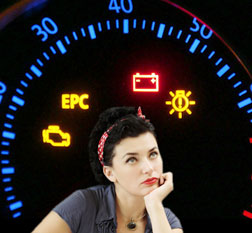
Most drivers tend to ignore those pesky little warning lights on the dashboard gleaming back at them and continue to drive anyway, waiting on average almost two weeks before getting it checked out. Why? Simply because they don’t fully understand what those lights mean. Even the most common ones, like the tire pressure, engine emission and fog-light indicators often go unattended to for lack of understanding. According to a survey conducted by a British automotive breakdown service, almost half of the participants involved could not identify their brake warning light, and more than 35 percent didn’t recognize their airbag warning. Not knowing these signs could potentially create a dangerous situation.

Another reason why there is an increase in drivers who are confused when it comes to their dashboard is partly due to the fact that newer vehicles are now equipped with more buzzers and lights than ever before. “As in-car technology becomes more advanced, there are now more and more in-car gadgets with symbols that support everything from the car’s satellite navigation system to its heating and cooling options,” said a spokesman for the survey.

It was concluded that of the 99 different dashboard lights identified in the study, just 12 of the lights were common across all vehicle models.

The Up Side to Traffic Tickets

web-CIOT-web

Nobody wants to be on the receiving end of a traffic ticket. Not only are they expensive, but one ticket alone could significantly increase your insurance premium. But as much as you may gripe about it, on the positive side, a traffic ticket could very well be what saves your life!

According to a study published in a British medical journal, a driver’s risk of being involved in a fatal accident fell by 35% the month after receiving a ticket for a moving violation. Drivers who were caught by automatic speed-enforcement cameras claimed the biggest reduction in risk.

Additionally, the study concluded that when the number of traffic tickets was down, the number of fatal accidents were up the following month. But, when the number of traffic tickets issued increased, the number of fatal accidents went down.

One Ohio teenager credits a traffic citation with saving her life. Eighteen-year-old Taylor Newland started wearing her seatbelt after she received a ticket just one week before she crashed her SUV. Initially, Newland was pulled over for speeding, but because she wasn’t wearing a seatbelt, was then issued a ticket for not buckling up. “That $30 seatbelt ticket saved my life. And honestly, if I didn’t get pulled over that day, I don’t know if I’d be here,” proclaimed Newland. I guess now many of you might rethink the purpose of a traffic ticket.

Supervision Required

Why You Shouldn’t Leave Your Kids Alone in the Car

Where's Baby?  Look Before you Lock
Sure, you’re only dropping some mail off at the post office, grabbing some milk from the grocery store, or picking up the dry cleaning. I mean there’s no harm in that right, especially when it only requires a couple minutes of your time, so leaving your child in the car for just a moment should be fine, right? Wrong! According to Safe Kids, 30 children die each year when they are left unsupervised in the car. It only takes seconds for something horrific to happen.

Not only is it scary for a small child to be left alone, but your vehicle’s temperature can change dramatically, and very quickly, which can affect your child’s oxygen levels, and in some cases causing hyperthermia and/or suffocation.

Aside from temperature changes, inadvertent gear-shift crashes, locking parents out of the car, trunk entrapments, or getting limbs caught in the windows, are just some of the many possible dangers leaving a child unattended in a vehicle could lead to. This is considered a misdemeanor offense; the offense can become a felony if there are resulting injuries.

Waking up a sleeping child or getting a toddler out of a car seat in the freezing cold or rain can be quite a hassle, so it’s understandable why many parents fall victim to this. But, if you need money, find a drive through ATM. If you need gas, use a credit card at the pump, or find a full-service station. Whatever you do, just don’t leave your child in the car alone!

Drive in the Rain? Use Your Brain.

Driving in the Rain

Unlike the popular 80’s song Blame it On the Rain, don’t. What did rain ever do to you besides water your garden and kind-of wash your car?? Though rain is blamed for a gazillion accidents each year, most of these fender-benders are preventable and not the rain’s fault at all. Rather, the true culprits of foul-weather flip-overs are un-brainy drivers failing to concede that they need to save their normal driving habits for another un-rainy day.

Here are a handful of wet-road-reminders for those days when the rain won’t go away:

  • Be very cautious when it first rains after a period of dry weather. Oil and grease gradually build up on the road and when it rainfall hits, your joyful ride can instantly turn into a not so fun slip and slide.
  • As they say, “When it rains, bad traffic pours.” You know traffic will be congested in inclement weather, so give yourself a few extra minutes to arrive safely to your destination.
  • Tailgating, is bad enough. Tailgating when the roads are slick? That’s just plain idiotic. Give yourself bigger space cushions with the cars ahead of you so you have more time to stop safely. Braking by slamming on the brake pedal will make your already rainy day even rainier.
  • Go ahead, show off! Yes, we want you to draw attention to yourself, really!! When it’s raining, everyone’s visibility is hampered. Remember to turn your headlights on (low beams please) and keep your windows defogged. Also, be on the lookout for cars without lights on, pedestrians, and other road hazards that might get lost in the rainy shuffle.
  • Unless you drive a hovercraft, the inner lanes of the road are probably your best bet. Most roads slope downward toward the curb where you’ll find those deep, hard to avoid puddles.
  • You cruise, you lose. If you hydroplane while using cruise control, your car may suddenly and abruptly speed up. Good luck to you When your tires return to the wet road at an accelerated speed. Hopefully you remembered to wear your seatbelt.
  • If your car does start to hydroplane, don’t freak out: jerking the wheel or hitting the brakes are BAD ideas! Instead, ease your foot off the gas and hold the steering wheel firmly until your car regains traction with the road.

What did we learn? Driving conditions will be less than ideal as long as raindrops keep falling on your hood. If you can, stay off the streets when the weather takes a turn for the wet. If you have places to go and people you must see, just remember that not all driving situations were created equal, and when it comes to wet roads, you need to carry yourself with a little extra common sense!