Do you have a new driver in your home getting ready for the DMV drive test? Join Ben from our partner company Drivers Ed Direct as he outlines common mistakes made by new drivers and how to avoid them.
No time to read a long-winded BLOnG? Welcome to the Three-Second-Stop mini-Blog.
With people being encouraged to stay home to slow the spread of the Coronavirus, the Department of Homeland Security has extended the REAL ID enforcement deadline by one year. REAL ID enforcement will now begin October 1, 2021. In a statement issued on March 26, 2020, Chad Wolf, Acting Secretary of Homeland Security, expressed, “Extending the deadline will also allow the Department to work with Congress to implement needed changes to expedite the issuance of REAL IDs once the current health crisis concludes.”
A REAL ID is a driver license or identification card that meets minimum security standards and is a federally accepted form of identification. A REAL ID can be used to board flights within the U.S. and enter secure federal facilities. For more information on REAL ID requirements in your state, check with your local department of motor vehicles.
The start of Daylight Saving Time is right around the corner, which means it’s a good time to take care of a few safety essentials around the house. Set your clocks ahead, check smoke detectors, and check your VIN for recalls at NHTSA.gov/recalls.
Daylight saving time will begin Sunday, March 8, 2020.
Tune in and pick up some helpful tips on driving in adverse weather conditions. Allstate Insurance’s video is short and sweet, but also packed with useful information on handling fog, ice, and heavy rain.
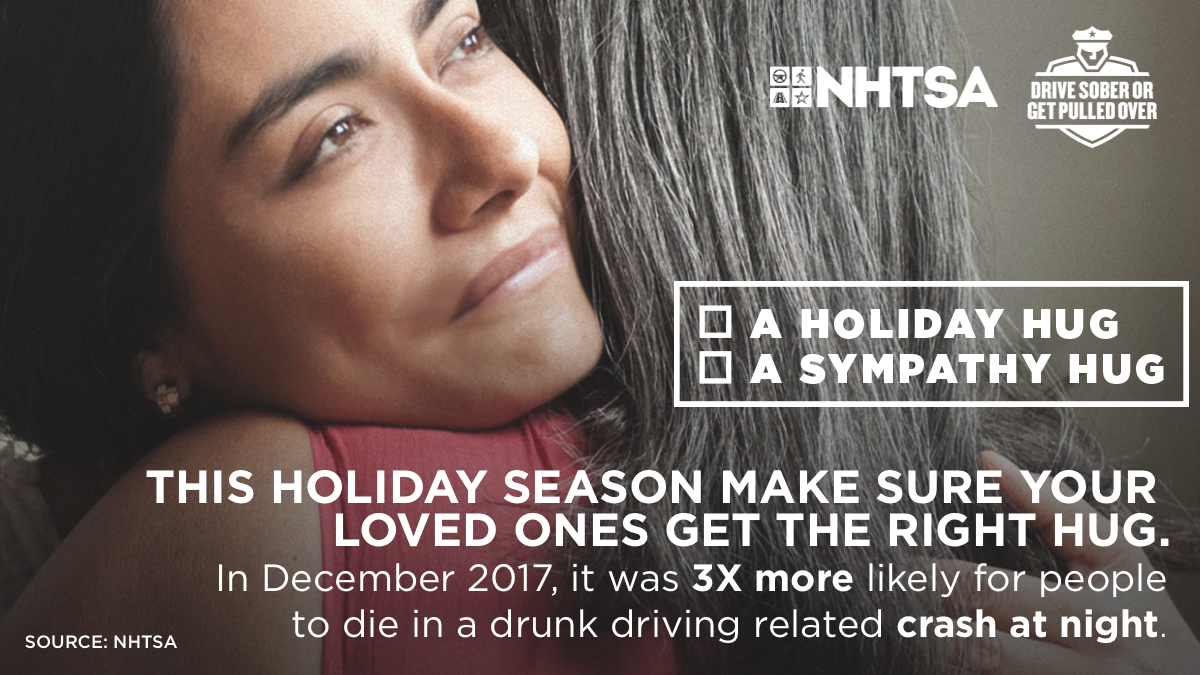
The U.S. Department of Transportation’s National Highway Traffic Safety Administration is once again teaming up with law enforcement across the United States during the 2019 Holiday Season to increase enforcement targeting the traffic safety issue of impaired driving. The enforcement campaigns, Drive Sober or Get Pulled Over and If You Feel Different, You Drive Different. Drive High, Get a DUI, run from December 13, 2019, through January 1, 2020 to coincide with the 2019 holiday season. The Holiday Season is one of the deadliest times of the year in terms of impaired-driving fatalities.
NHTSA reminds us, “It doesn’t matter what term you use: If a person is feeling a little high, buzzed, stoned, wasted, or drunk, he or she is impaired and should never get behind the wheel.”
No time to read a long-winded BLOnG? Welcome to the Three-Second-Stop mini-Blog.
Under normal driving conditions, the “Three-Second Rule” works great in determining following distance and should give you plenty of time and space to avoid a collision. Sometimes, however, you may need to add additional space to the equation, and this is called the “Three-Second PLUS Rule.” Here are some instances when you need to leave extra space and increase your following distance to 4 seconds or more:
For a more in-depth look at the 3-Second Rule check out our blog on Following Distance.

Recently I noticed a couple vehicles attempting to park next to a red painted curb, which in California is a big no-no. Curb markings are painted different colors to indicate what type of parking, if any, is permitted. California curb colors and their meanings are as follows:
Parking regulations and the use of colored curbs are set by local authorities. To find out designated curb colors near you, be sure to familiarize yourself with your local and state laws.
You may notice an increase in children walking to school next week. National Walk to School Day is October 2, 2019. The movement encourages communities to promote health and safer routes for students to walk to school. Children pose a special traffic problem because of their unpredictability. You should exercise extreme caution when driving by schools, parks, and through residential streets. Keep your speed down, scan the sides of the roads, and be prepared to stop at any time.
In California, unless otherwise posted, the speed limit is 25 mph within 500 to 1,000 feet of a school while children are outside or crossing the street. Some cities throughout California have adopted lower speed limits in school zones and have posted signs showing the speed as low as 15 mph.
Summer is drawing to a close. For many families the Labor Day weekend is a time for one last road trip before getting back into the school year groove. More people on the roads means greater potential for something to go wrong. While you enjoy your holiday please be vigilant behind the wheel and remember to:
Make your driving life a little easier with these four simple tricks. Pretty cool.