Intersection Safety

No time to read a long-winded BLOnG? Welcome to the Three-Second-Stop mini-Blog.

Today’s Three Seconds: Judging Time to Make a Maneuver

3 Second Stop

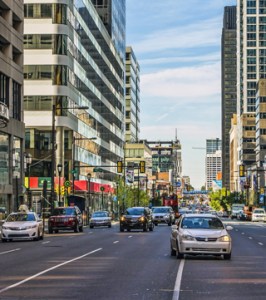
Judging time to make a maneuver requires you to estimate the distance and speed of other vehicles, and then proceed when you believe you have enough time to execute the maneuver safely. Whenever you drive in city traffic, you should always look a block ahead. It takes approximately 10 to 15 seconds to travel one block. If you are traveling on a highway with several lanes, or on a divided highway, check for vehicles in all lanes that you have to cross. Don’t forget to look for smaller bicyclists and motorcyclists and check crosswalks for pedestrians. You should cross or turn only after you have determined that you can complete the movement safely without impeding other road users.

Recalls Safety

The start of Daylight Saving Time is right around the corner, which means it’s a good time to take care of a few safety essentials around the house. Set your clocks ahead, check smoke detectors, and check your VIN for recalls at NHTSA.gov/recalls.

Daylight saving time will begin Sunday, March 8, 2020.

Temperature Rising

‘Look Before You Lock’ PSA from KidsAndCars.org is a good reminder to not leave children in cars in order to avoid heatstroke fatalities. In a new study, Consumer Reports found that, “Even on days with mild temperatures, the heat inside a closed vehicle can reach dangerous levels within an hour, posing major health risks to small children or pets left inside.”

For additional tips and information, check out our past posts Vehicular Heatstroke and Supervision Required.

Holiday Parking Tips

The holiday season means holiday shopping for many.  The Turlock PD shared a video with three simple tips to help avoid your parked vehicle being the target of a break in.

  1. Lock your doors.
  2. Roll your windows all the way up.
  3. Don’t leave your personal belongings in plain sight.

Night Driving

No time to read a long-winded BLOnG? Welcome to the Three-Second-Stop mini-Blog.

Today’s Three Seconds: Overdriving Your Headlights

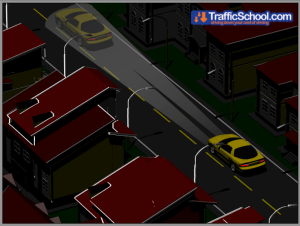
3 Second StopOver half of motor vehicle crashes happen when it is dark out. For this reason we should remind ourselves to be even more aware of our surroundings at night.  An issue to avoid when driving at night is overdriving your headlights. Overdriving your headlights occurs when you cannot stop within the space lighted by your headlights, or in other words, by the time you can see a hazard ahead, you don’t have enough time to stop or respond safely. Instead you should drive at a slow enough speed so that your vision in your headlights is greater or equal to your stopping distance.

Defensive Driving Tip

No time to read a long-winded BLOnG? Welcome to the Three-Second-Stop mini-Blog.

Today’s Three Seconds: IPDE Technique

3 Second StopAn essential part of defensive driving is being alert and attentive to your driving environment. At all times when driving, you must be aware of what is happening all around your vehicle, continuously scanning and searching for potential problems that may lead to a collision.

The “IPDE” technique is a four-step system used by drivers to anticipate and avoid collisions. IPDE stands for Identify, Predict, Decide, Execute and simply means:

1. Identify the potential problem.
2. Predict how the potential problem will affect you.
3. Decide what things you can do to avoid the potential problem.
4. Execute the maneuver that best avoids the potential problem.

Changing Lanes

S.M.O.G. Technique

Many drivers have a problem with changing lanes safely. The S.M.O.G. technique is meant to help remind you of the steps to take when planning a lane change. S.M.O.G. simply means:
  • Signal: Indicate your intentions to let other drivers know you plan on making a move before you actually do it.
  • Mirror: Check your mirrors to make sure that there is no traffic approaching from the rear.
  • Over-the-shoulder: Glance over your shoulder to make sure your blind spot is clear.
  • Go: When you’ve determined the lane is clear, gradually change lanes remembering to maintain your speed so that you don’t interfere with the traffic already in the intended lane.

Don’t forget to look ahead to anticipate and avoid traffic hazards. Before changing lanes, check the direction of travel and watch out for traffic coming from the opposite direction.

Vehicular Heatstroke

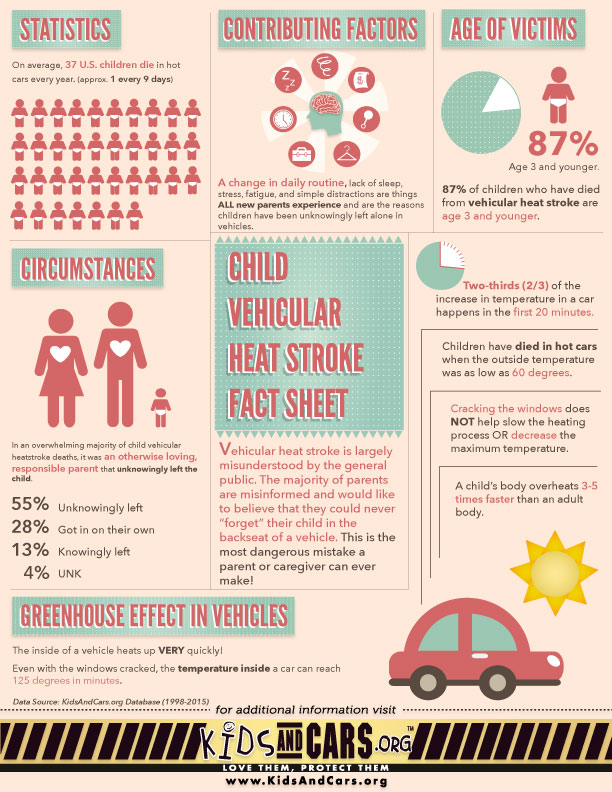
On average in the United States, 37 children die from heatstroke each year as a result of being left in a vehicle. Between 1990 and 2016 there have been a total of 793 vehicular heatstroke deaths. Over half (55%) are a result of being left behind unknowingly by a parent or caregiver. Another 28% occurred due to a child getting into the vehicle on their own.

According to KidsAndCars.org, 27 children have died in hot cars so far this year. The KidsAndCars.org safety campaign, “Look Before You Lock,” provides parents and caregivers an important safety checklist aimed at preventing heatstroke tragedies.

Avoid leaving your child alone in the car:

  • Get in the habit of always opening the back door and checking the back seat before leaving your vehicle.
  • Put something you will need, like a purse or a cell phone, in the back seat so you will have to open the back door to get it once you are parked.
  • Keep a stuffed animal in baby’s car seat. Each time your child is in the car seat, put the stuffed animal in the front seat as a reminder that baby is in the car.
  • Ask your child care provider to call if you have not dropped your child off as usual.

Make sure your child can’t get into your car:

  • Keep your vehicle locked at all times, even in your garage or driveway.
  • Keep your keys and clickers in a safe place out of your child’s reach.
  • If your child goes missing, check inside your vehicle and trunk right away.

Walk This Way

Pedestrian Safety

According to National Highway Traffic Safety Administration (NHTSA), in 2014 a pedestrian was killed every 2 hours and injured every 8 minutes on average in U.S. traffic crashes.

While the number of total traffic fatalities has decreased over the last 10 years, the percentage of pedestrian traffic fatalities has increased.  In 2005, Fatality Analysis Reporting System (FARS) reported 43,510 total traffic fatalities, 11% (4,892) of which were pedestrian fatalities.  In 2014, FARS reported 32,675 total traffic fatalities, 15% (4,884) of which were pedestrian deaths.

The rise in percentage of pedestrian deaths may be partly due to improvements to vehicle occupant protection and safety features.  While safer vehicles improve a passenger’s survival rate in a crash, a pedestrian still has no defense if struck by a vehicle.

Another pedestrian safety concern: distracted walking.  A Pew Research Center survey found that 53% of adult cellphone owners either had bumped into a person/object while using their phone or had been bumped into by another person distracted by their cellphone.  Distracted walking on or near a roadway can spell disaster.

Important Safety Reminders for Pedestrians:

  • Walk on a sidewalk or path when one is available.
  • If no sidewalk or path is available, walk on the shoulder, facing traffic. Stay alert; don’t be distracted by electronic devices, including smart phones, MP3 players, and other devices that take your eyes (and ears) off the road.
  • Be cautious night and day when sharing the road with vehicles. Never assume a driver sees you (he or she could be distracted, under the influence of alcohol and/or drugs, or just not see you). Make eye contact with drivers as they approach.
  • Be predictable. Cross streets at crosswalks or intersections when possible. This is where drivers expect pedestrians.
  • If a crosswalk or intersection is not available, locate a well-lit area, wait for a gap in traffic that allows you enough time to cross safely, and continue to watch for traffic as you cross.
  • Be visible. Wear bright clothing during the day, and wear reflective materials or use a flash light at night.
  • Avoid alcohol and drugs when walking; they impair your judgment and coordination.

Source: NHTSA’s Safety Countermeasures Division