Stop Blinking at Me

Dashboard Confusion

dashboard_lights_web

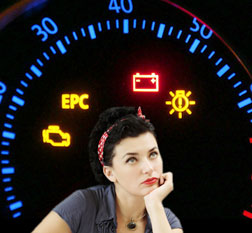
Most drivers tend to ignore those pesky little warning lights on the dashboard gleaming back at them and continue to drive anyway, waiting on average almost two weeks before getting it checked out. Why? Simply because they don’t fully understand what those lights mean. Even the most common ones, like the tire pressure, engine emission and fog-light indicators often go unattended to for lack of understanding. According to a survey conducted by a British automotive breakdown service, almost half of the participants involved could not identify their brake warning light, and more than 35 percent didn’t recognize their airbag warning. Not knowing these signs could potentially create a dangerous situation.

Another reason why there is an increase in drivers who are confused when it comes to their dashboard is partly due to the fact that newer vehicles are now equipped with more buzzers and lights than ever before. “As in-car technology becomes more advanced, there are now more and more in-car gadgets with symbols that support everything from the car’s satellite navigation system to its heating and cooling options,” said a spokesman for the survey.

It was concluded that of the 99 different dashboard lights identified in the study, just 12 of the lights were common across all vehicle models.
At the Pump

What The Gas Stations Won’t Tell You

gas_pump
Did you know? Gas stations earn on average between 10 and 15 cents on a gallon of gas. But, they earn the least when prices are highest. When the cost of fuel rises, gas stations must reduce their profit margin in order to stay in competition. So, they actually fear gas increase just as much as you do.

Did you know? Oil companies spend lots of money explaining why their gas is better than the competitions. But in reality, one gallon of gas is as good as the next. Additives help to clean your engine, but what the companies don t tell you is that all gas has them. The government requires that detergents be added to all gasoline to help prevent fuel injectors from clogging.

Did you know? You don’t even need gas to run your car. While it is true that all cars run on gasoline, it is also fact that not all cars need gasoline to run. In fact, 6 million cars on the road today (mostly from U.S. manufacturers and built since 1998) are flexible fuel vehicles that can run on E85, a fuel that is 85 percent ethanol and only 15 percent gas.

No Car? No Insurance? No Problem.

Rent a Ride by the Minute

car2go
Not everyone has the means to maintain a vehicle, or want one for that matter…but that doesn’t stop the fact that you need to get around, whether it be for work, school, or anything else that requires wheels. If you are like the countless many who fall into this category, only needing a vehicle on occasion, then you may want to check out Car2go, a new service being introduced in Denver that lets people rent a ride by the minute.

According to ‘4 On Your Side Money Saver’ Suzanne McCarroll, “one of the fun features of this smart car is that it recognizes you and your card key, so when you get in it, it says, ‘Hello, (insert your name here).’ Nicholas Cole with Car2go explains, “You simply walk up to an existing vehicle, hold the membership card to the scanner, it will process the card. For 38 cents per minute, drivers are good to go. For those who only need to do a quick errand, they’re out only a few dollars. Members don’t pay for gas or car insurance and they don’t even have to pay for parking meters in Denver.”

All you have to do is locate where the cars are parked around the city with the Car2go Smartphone app. You don’t even have to drop off the car where you picked it up from. It really is that simple!

The Up Side to Traffic Tickets

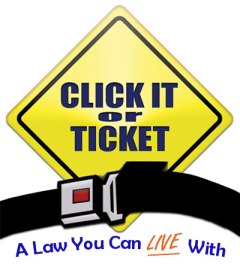
web-CIOT-web

Nobody wants to be on the receiving end of a traffic ticket. Not only are they expensive, but one ticket alone could significantly increase your insurance premium. But as much as you may gripe about it, on the positive side, a traffic ticket could very well be what saves your life!

According to a study published in a British medical journal, a driver’s risk of being involved in a fatal accident fell by 35% the month after receiving a ticket for a moving violation. Drivers who were caught by automatic speed-enforcement cameras claimed the biggest reduction in risk.

Additionally, the study concluded that when the number of traffic tickets was down, the number of fatal accidents were up the following month. But, when the number of traffic tickets issued increased, the number of fatal accidents went down.

One Ohio teenager credits a traffic citation with saving her life. Eighteen-year-old Taylor Newland started wearing her seatbelt after she received a ticket just one week before she crashed her SUV. Initially, Newland was pulled over for speeding, but because she wasn’t wearing a seatbelt, was then issued a ticket for not buckling up. “That $30 seatbelt ticket saved my life. And honestly, if I didn’t get pulled over that day, I don’t know if I’d be here,” proclaimed Newland. I guess now many of you might rethink the purpose of a traffic ticket.

High & Mighty High Beam

No time to read a long-winded BLOnG? Welcome to the Three-Second-Stop mini-Blog.

Today’s Three Seconds: High Beams

high_beam3 Second Stop

Unfortunately, a good majority of accidents occur at night, so understanding when to use your high beams is very important.  If you happen to be on a divided highway and the cars that are traveling in the opposite direction are more than 500 feet away, you are in the clear to use your high beams.

Now you know.

Deceleration Detected

Brake Lights That Warn Other Drivers Of Traffic?

brake_web

This sounds like a great idea, right? I mean, wouldn’t it improve safety issues and lessen the amount of accidents all around the world? Well, Ford thinks so.

Ford has developed an experimental brake light that lets the vehicles behind you know when there’s slow traffic ahead, even if they can’t see your lights.

So how exactly does it work? Well, included in the brake light system is a wireless transmitter that sends a special signal to vehicles that are behind you which then activates a light on their dashboard letting them know that there is some slow traffic ahead, with the intent that they will slow down or take an alternate route if possible.

The feature gives drivers more than enough time to slow down instead of having to unexpectedly slam on the brakes because of bad weather, poor road conditions, or any other circumstances that might cause you or the vehicles behind you to be stuck in traffic; and who wants that?

Although Ford hasn’t officially announced if or when it plans to add the enhanced brake light system into their upcoming models, it is still a giant leap towards vehicle-to-vehicle communications. Sounds like they’re moving in the right direction with this one.

Don’t Wait to Have “The Talk”

Is It Time To Hand Over Those Keys?

keys3

When is the right time to tell a senior loved one that their days behind the wheel are lessening with each passing day?

According to statistics, there are approximately 33 million drivers over the age of 65 regularly operating a motor vehicle in the United States. The majority of these motorists are injured daily from driving-related accidents; some even killed.

Because of medical complications, disabilities, a decline in vision and cognitive functions, the risk of vehicular fatalities increases significantly after the age of 75.

Although these are plenty of reasons to be off the road completely, telling someone who has been driving for as long as they can remember isn’t exactly the easiest conversation to have. In fact, according to a new study, published in the Journal of General Internal Medicine, from the University of Colorado School of Medicine and the CU College of Nursing, clinicians often wait too long before having “the talk.”

Based on a study conducted by Dr. Marian Betz, researchers found that most of the more mature and seasoned drivers were open to being approached earlier with driving retirement. It allows them more than enough time to process and prepare in the event they become incapable to drive.

Several states have considered instituting an elderly driving law, requiring individuals to be retested behind the wheel after a certain age.

Seeing Red

Road Rage: Do You Have It In You?

s1roadrage_web_2Road rage. We all have a little bit in us. No? Remember that time when the vehicle in front of you was driving so obnoxiously slow that if you got out of your car and walked, you’d probably make it to your destination a lot faster? Or how about the driver who continuously slammed on his breaks causing you to do the same, for absolutely no reason at all? Yes, I’m sure you remember moments like this. You may even remember how you felt, the choice of words you used, and the amount of frustration endured. However, some of us choose to take this anger and act upon it in ways that presents not only self-danger, but danger to other motorists on the road as well.

Road rage is defined as aggressive or angry behavior by a driver of an automobile or other motor vehicle. Such behavior might include rude gestures, verbal insults, deliberately driving in an unsafe or threatening manner, or making threats. Road rage can lead to altercations, assaults, and collisions which result in injuries and even deaths.

So, if you are ever confronted with an aggressive driver, what should you do?

1. Avoid direct eye contact with a driver who appears to be agitated. Many people associate eye contact with a challenge or threat. Even a friendly smile can be misinterpreted as a sarcastic threat.

2. Put Your Pride Aside. Do not challenge them by speeding up or attempting to hold-your-own in your travel lane.

3. Gestures. Ignore gestures and refuse to return them.

4. Report Serious Aggressive Driving. You or a passenger may call the police. But, if you use a cell phone, pull over to a safe location.

Aggressive driving contributes to 56 percent of all fatal car crashes, so next time think twice before you react!

(Source: National Highway Traffic Safety Administration)

Attention Drivers

Apple’s iOS Is Now At Your Fingertips

iOS_Car_02-webWell, next year anyway.  Apple announced that they are in the process of enhancing iPhone integration in cars with its latest software update, iOS 7, referring to it as the ‘iOS in the Car’ feature at the company’s Worldwide Developers Conference in San Francisco.

Automakers such as Acura, Chevrolet, Ferrari, Honda, Hyundai, Infiniti, Jaguar, Kia, Opel, Mercedes-Benz, Nissan and Volvo are amongst the vehicles that will offer the new ‘iOS in the Car’ feature, which will allow drivers to access key functions on their iPhone via the dashboard screen. You’ll be able to make phone calls, play music, display Apple Maps and receive iMessages, either by using the car’s controls or by giving voice commands to Siri through the car’s sound system.

“Ninety-five percent of cars sold today have integrated music playback and control from an iOS device, but we want to take this integration to a whole ’nother level,” said Eddy Cue, Apple’s senior vice president of software and services.

And if that wasn’t reason enough to take advantage of the new feature that will be available through selected vehicles in 2014, then perhaps this might…as part of Apple’s Eyes Free feature set, Siri can read iMessages aloud and transcribe responses as well!

Supervision Required

Why You Shouldn’t Leave Your Kids Alone in the Car

Where's Baby?  Look Before you Lock
Sure, you’re only dropping some mail off at the post office, grabbing some milk from the grocery store, or picking up the dry cleaning. I mean there’s no harm in that right, especially when it only requires a couple minutes of your time, so leaving your child in the car for just a moment should be fine, right? Wrong! According to Safe Kids, 30 children die each year when they are left unsupervised in the car. It only takes seconds for something horrific to happen.

Not only is it scary for a small child to be left alone, but your vehicle’s temperature can change dramatically, and very quickly, which can affect your child’s oxygen levels, and in some cases causing hyperthermia and/or suffocation.

Aside from temperature changes, inadvertent gear-shift crashes, locking parents out of the car, trunk entrapments, or getting limbs caught in the windows, are just some of the many possible dangers leaving a child unattended in a vehicle could lead to. This is considered a misdemeanor offense; the offense can become a felony if there are resulting injuries.

Waking up a sleeping child or getting a toddler out of a car seat in the freezing cold or rain can be quite a hassle, so it’s understandable why many parents fall victim to this. But, if you need money, find a drive through ATM. If you need gas, use a credit card at the pump, or find a full-service station. Whatever you do, just don’t leave your child in the car alone!