How Do You Rate?
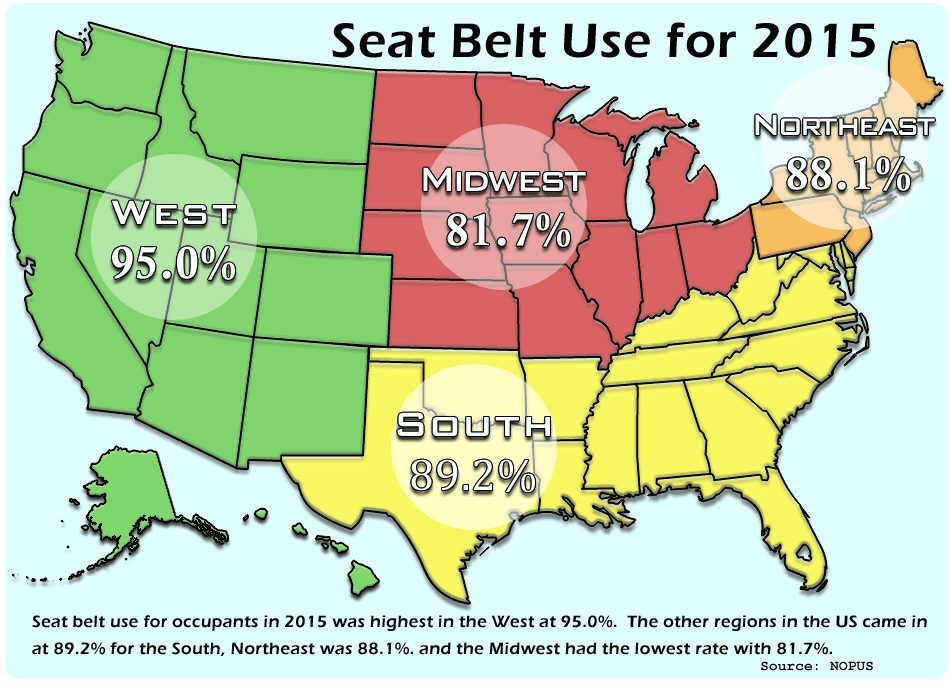 Seat belt use in the United States has been steadily rising since 2000. There has also been a consistent decrease in unrestrained passenger vehicle occupant fatalities in the daytime.
The overall National average seat-belt use in 2015 was 88.5%. The Western States have the highest average with 95.0% and the Midwest has a ways to go coming in at 81.7%.
As you can image, States that have Primary Seat Belt laws (an officer can ticket you for the sole reason you are not wearing a seat-belt) have a higher rate of seat belt use as compared to States that have secondary enforcement laws (requires an officer to pull you over for another reason before you can receive a citation for not using your seat belt.)
Source: National Highway Traffic Safety Administration Report No. DOT HS 812 243







 Did you know motor oil doesn’t wear out? It just gets dirty. Which means it can be recycled and reused in several ways. All over the U.S. there are used oil collection locations available. These organizations allow the average Joe to dispose of old motor oil, which in turn keeps that oil out of our ground water and waterways. Next time you change the oil in your car, or even your lawnmower, collect the dingy oil in a metal or plastic container to be recycled. These collection centers should also accept old oil filters and bottles. To find a collection center near you, visit