Wrong Way Drivers
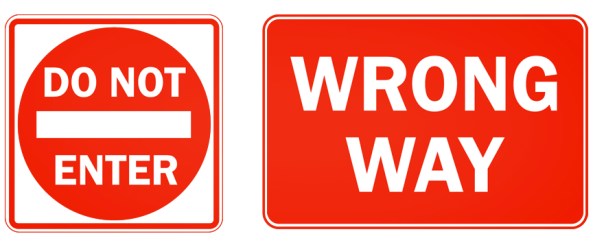 Having a driver who is driving right towards you at highway speeds is not only scary, but is also extremely dangerous. According to the Federal Highway Administration, in the US, wrong-way driving crashes result in 300 to 400 people killed each year on average, which represent about 1% of the total number of traffic related fatalities. Though the percentage is low, wrong-way crashes on divided highways are much more likely to result in fatal and serious injuries because they involve high speed, head-on collisions.
In a study, the National Transportation Safety Board (NTSB) found that driving while impaired by alcohol is the primary cause of wrong-way driving collisions, with more than 60 percent of wrong-way collisions caused by drivers impaired by alcohol. They also found that wrong-way collisions occur most often at night and during the weekends, and they tend to take place in the lane closest to the median.
Tips for dealing with a wrong way driver start with defensive driving basics:
- Always use your seat belts. A seat belt is the single most important safety equipment feature of your vehicle, but in order for safety belts to work, they must be worn properly and at all times while driving. A lap and shoulder belt worn properly increase your chances of surviving a collision by 3 to 4 times than if you are unrestrained.
- Scan for hazards. Keep your eyes moving and remember to look further down the road. Scanning enables your eyes to take in the whole scene, enabling you to identify a hazard before it becomes a last-second crisis. You should also be constantly looking for an escape route or somewhere to go if you encounter a problem or hazard on the road.
- Don’t drive distracted. Don’t allow yourself to become distracted by your cell phone, eating, drinking or even your kids. When you take focus off of driving, you increase the time it takes you to react to problems on the road, which will in turn increase your chances of getting into a collision.
- At night, stay to the right side of the road, in the right lanes and avoid driving in the fast lane, or lane closed to the median, especially if your view is blocked by curves or hills.
If you do see a wrong way driver, then:
- Reduce your speed and move to the right lane or shoulder as quickly as you can without losing control of your car. Once the wrong way driver has safely passed you, be sure to notify the authorities.
- If you can’t move out of the wrong way driver’s path, avoid being hit head-on by turning your car sideways. Head on collisions have the highest fatality rate, so if you are going to get hit, it is better to be hit at an angle, if possible at or behind the rear wheels, than taking the full force of the crash head-on.
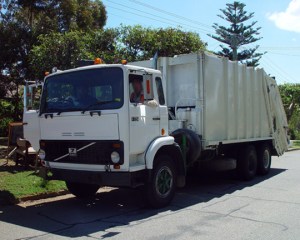
 A new law went into effect January 1, 2019, aimed at providing sanitation workers with more room to safely do their jobs. California Vehicle Code 21761−Passing Waste Service Vehicles requires motorists, when approaching and overtaking a stopped waste service vehicle with its amber lights flashing, to move into an available lane adjacent to the waste service vehicle and pass at a safe distance. If it is not possible to make a lane change, drivers must slow to a safe and reasonable speed.
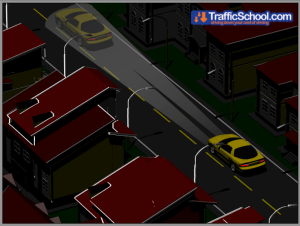
 Many drivers have a problem with changing lanes safely. The S.M.O.G. technique is meant to help remind you of the steps to take when planning a lane change. S.M.O.G. simply means: