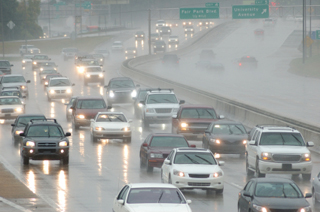
Driving in the rain can be difficult for almost every driver. In fact, the FHWA (Federal Highway Administration) states that “the vast majority of most weather-related crashes happen on wet pavement and during rainfall.”
Some things you can do to avoid a potential weather-related crash are:
- Slow down and give yourself space between other vehicles.
- Use your low beam headlights to help you to see better and to make yourself more visible to other drivers.
- Ensure that your windshield wipers are in good condition. This is very important as visibility is already bad with rain.
- Tire health is also very important. Bad tires can lead to your car sliding and potentially skidding. Check your tread depth and tire pressure regularly.
If you still don’t feel safe about driving in the rain, then postpone your outing if possible.




 Due to less traffic on the roads in the last few months, more citations for excessive speed have been issued throughout the US. Even with less traffic, speeding motorists put themselves at greater risk. Speeding can lead to loss of vehicle control. Speeding increases the potential for more last second braking which increases the risk of a collision. Traveling at higher speeds mean less reaction time to respond to other collision factors, like other motorist’s driving errors, equipment failure, and poor roads. In addition, a crash at higher speeds will have a greater force of impact than at lower speeds. So even though an open road may be tempting you to drive a little faster, please continue to take your time and get to where you are going safe and sound.
 Right Side of the Road