Child Passenger Restraints
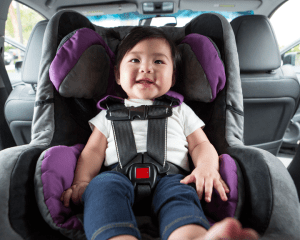 January 1st, 2017 ushers in new laws and regulations. In California one new law affecting motorist and parents will require child passengers under the age of two to be secured in rear-facing child safety seats.
Transporting children in age- and size-appropriate car seats, booster seats, or seat belts is key to keeping kids safe on the road. According to National Highway Traffic Safety Administration (NHTSA), child safety seats lower the risk of fatal injury for infants (under 1 year old) by 71% and by 54% for toddlers (1 to 4 years old) in passenger cars.
NHTSA recommends using a Rear-Facing Car Seat for as long as possible: age 0 to 3 years or once your child outgrows the rear-facing car seat. Rear-facing seats are the safest way to transport a child as in a crash the impact force is more evenly distributed along the outer shell of the seat, keeping the child’s neck and spine in line.
Be sure to read the instruction manual for your child safety seat as well as your vehicle owner’s manual on car seat installation. Check height and weight limits of the car seat and never place a rear-facing car seat in the front seat or in front of an active airbag.
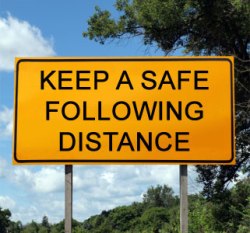 Allowing yourself proper following distance between your car and the car ahead of you can be difficult to visually estimate. A good way to gauge a suitable gap is to use the “Three-Second Rule.” Here’s how it works: when the car or truck in front of you crosses a certain fixed object on the side of the road (like a sign or tree), start counting, “one thousand one, one thousand two, one thousand three.” You should not cross that same point for three seconds. Under normal conditions it takes about 2-3 seconds to completely stop when traveling at speeds between 35 mph to 65 mph; so with a three-second space cushion, you should have enough time to react and brake when something happens up ahead.
 Driver impairment is not only caused by drugs and alcohol. Our driving is impaired anytime our ability to operate a vehicle is compromised. Because emotions can govern our behavior to a large extent, they too can diminish our driving capabilities. Emotional impairment can affect our ability to recognize risks and quickly react.
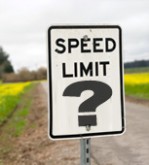 Driving is fast paced. There is a lot going on around your vehicle that needs to be taken into account. That’s why speed limits are important. They tell us a safe speed to travel at in a given area. However, sometimes even the posted speed limit is not safe. This is where the Basic Speed Law comes into effect. The Basic Speed Law tells us to not drive faster than is reasonable and prudent under the current conditions. That means you need to take into account everything going on in your driving environment and decide what the safest speed is. Otherwise, you could find yourself with a ticket.
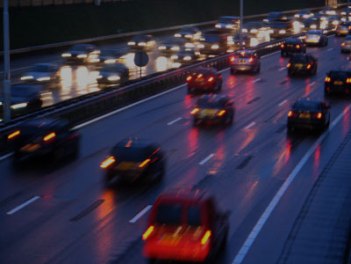 With the passing of Daylight Savings and shorter days, it’s getting dark earlier. This makes the drive home each night a little more difficult. Night driving brings its own set of concerns and requires more concentration and attention to your driving environment.
 The holiday season is right around the corner bringing many merry festivities with it. Unfortunately this usually means an increase in drunken drivers on the road. If you notice an impaired driver sharing the road with you, what should you do?
 Road safety starts with you, the driver. Here are a few defensive driving pointers to help you stay safe and sound while on the go.
 Right Side of the Road