Smoking and Driving: Unveiling the Risks


You might think that puffing on a cigarette while driving down the road is no big deal, but the truth is, it comes with some serious drawbacks. For starters, it’s a major distraction – your attention gets pulled away from the road, which always increases the chances of a collision. And that’s not all – besides reducing your reaction time, smoking can also hamper your visibility when the smoke obscures what’s happening around you.

But wait, there’s more. If you’ve got company in the car, like friends or family, they’re basically along for the secondhand smoke ride as they end up breathing in harmful carcinogens with you. And, if you’re in California, there’s a law you should know about that says you can’t light up in a car, whether it’s moving or parked, if there’s anyone under 18 present.

So, the next time you’re tempted to smoke behind the wheel, you might want to think twice – for your safety and everyone else’s too.
Too Hot to Handle

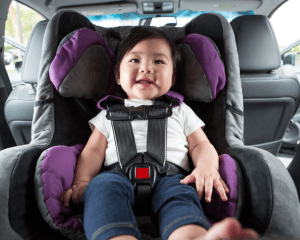
With summer officially beginning on June 21st, temperatures are starting to rise. July is usually the hottest month out of the year and this was even more true last year when a new record was set. According to NOAA (National Oceanic and Atmospheric Administration), July 2021 was the hottest month ever recorded in human history. As temperatures rise so does the risk of heatstroke, especially for vulnerable children and animals left alone in vehicles. Since 1998, 912 children have died from Pediatric Vehicular Heatstroke (PVH).

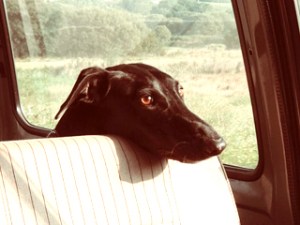
Even if you’re not a parent or a caregiver, you can still do your part in preventing a tragedy. Always make sure to lock your car doors to avoid unattended children going into your vehicle. And if you see a child alone in a car, call 911, then try to get them out immediately. The same goes for dogs and other animal companions. PETA (People for the Ethical Treatment of Animals) states that in 2021, 59 animals died after being left in hot cars, and those are just the ones that were reported.

All hot car deaths can be prevented. Whether we are parents, caretakers, or just bystanders, we can all be alert and aware to make sure the number of hot car deaths for both children and animals no longer rises.

Little Pedestrians

National Walk to School Day

You may notice an increase in children walking to school next week. National Walk to School Day is October 2, 2019. The movement encourages communities to promote health and safer routes for students to walk to school. Children pose a special traffic problem because of their unpredictability. You should exercise extreme caution when driving by schools, parks, and through residential streets. Keep your speed down, scan the sides of the roads, and be prepared to stop at any time.
In California, unless otherwise posted, the speed limit is 25 mph within 500 to 1,000 feet of a school while children are outside or crossing the street. Some cities throughout California have adopted lower speed limits in school zones and have posted signs showing the speed as low as 15 mph.

Temperature Rising

‘Look Before You Lock’ PSA from KidsAndCars.org is a good reminder to not leave children in cars in order to avoid heatstroke fatalities. In a new study, Consumer Reports found that, “Even on days with mild temperatures, the heat inside a closed vehicle can reach dangerous levels within an hour, posing major health risks to small children or pets left inside.”

For additional tips and information, check out our past posts Vehicular Heatstroke and Supervision Required.

Vehicular Heatstroke

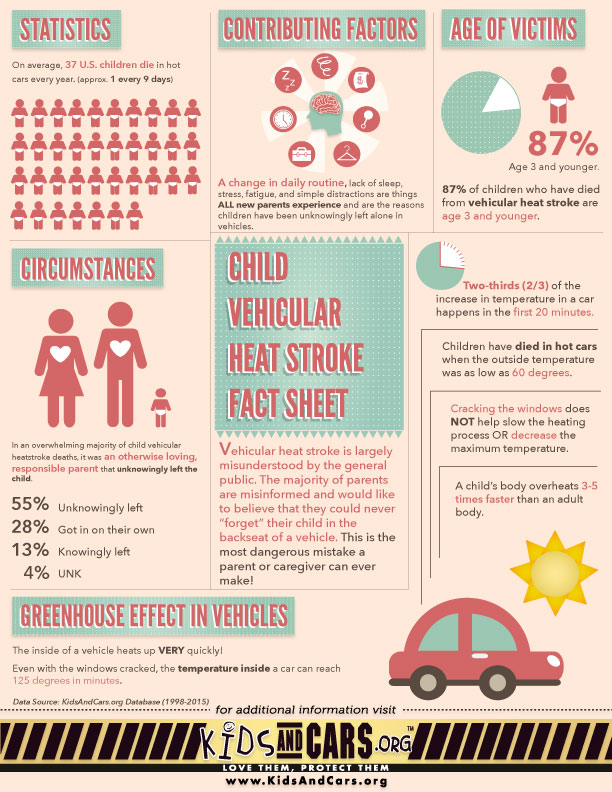
On average in the United States, 37 children die from heatstroke each year as a result of being left in a vehicle. Between 1990 and 2016 there have been a total of 793 vehicular heatstroke deaths. Over half (55%) are a result of being left behind unknowingly by a parent or caregiver. Another 28% occurred due to a child getting into the vehicle on their own.

According to KidsAndCars.org, 27 children have died in hot cars so far this year. The KidsAndCars.org safety campaign, “Look Before You Lock,” provides parents and caregivers an important safety checklist aimed at preventing heatstroke tragedies.

Avoid leaving your child alone in the car:

  • Get in the habit of always opening the back door and checking the back seat before leaving your vehicle.
  • Put something you will need, like a purse or a cell phone, in the back seat so you will have to open the back door to get it once you are parked.
  • Keep a stuffed animal in baby’s car seat. Each time your child is in the car seat, put the stuffed animal in the front seat as a reminder that baby is in the car.
  • Ask your child care provider to call if you have not dropped your child off as usual.

Make sure your child can’t get into your car:

  • Keep your vehicle locked at all times, even in your garage or driveway.
  • Keep your keys and clickers in a safe place out of your child’s reach.
  • If your child goes missing, check inside your vehicle and trunk right away.

Keep Them Safe

Child Passenger Restraints

rear-facing-child-seatJanuary 1st, 2017 ushers in new laws and regulations. In California one new law affecting motorist and parents will require child passengers under the age of two to be secured in rear-facing child safety seats.

Transporting children in age- and size-appropriate car seats, booster seats, or seat belts is key to keeping kids safe on the road. According to National Highway Traffic Safety Administration (NHTSA), child safety seats lower the risk of fatal injury for infants (under 1 year old) by 71% and by 54% for toddlers (1 to 4 years old) in passenger cars.

NHTSA recommends using a Rear-Facing Car Seat for as long as possible: age 0 to 3 years or once your child outgrows the rear-facing car seat. Rear-facing seats are the safest way to transport a child as in a crash the impact force is more evenly distributed along the outer shell of the seat, keeping the child’s neck and spine in line.

Be sure to read the instruction manual for your child safety seat as well as your vehicle owner’s manual on car seat installation. Check height and weight limits of the car seat and never place a rear-facing car seat in the front seat or in front of an active airbag.

To-and-Fro: Stay Safe as You Go

School Bus Passenger Tips

School is starting all across the country. Now is a good time to teach, or remind, your little ones about school bus safety.

  1. When waiting at the bus stop, stay on the sidewalk, away from the road. Pay attention to what is going on around you. Don’t get distracted by playing with your friends.
  2. When getting on the bus, find a seat promptly and sit down facing the front of the bus. Sit still and talk quietly with your neighbor. Don’t distract the bus driver with a lot of ruckus. Let them do their job safely driving you to school.
  3. When exiting the bus, be aware of passing cars. Put distance between you and the bus so the bus driver will be able to see you. Stay away from the wheels of the bus and remember to cross in front of the bus, not behind it.