Motorcycle & Bicycle Awareness
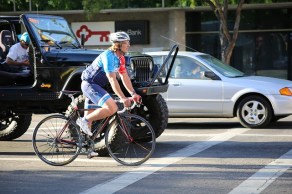 May kicks off both Motorcycle Safety Awareness Month & Bicycle Safety Month. With only two wheels, motorcycles and bicycles are less stable and require the rider to have great handling ability. They are much smaller and harder to see than other vehicles on the road. Consequently, motorcycles and bicycles are more easily hidden or missed by other drivers. Also, they don’t have the same protection as an automobile driver, making any type of collision or wipeout serious or fatal.
What you may not know is bicyclists and motorcyclists have the same right to ride on the road as other vehicles.  Furthermore, they are subject to the majority of laws that all other drivers are required to follow. As a driver, don’t forget to always check your blind spots every time you change lanes or prepare to make turn. Remember to consider a bicycle lane the same as other traffic lanes. Also, do not try to pass a bicyclist until it is safe to do so allowing ample room between your vehicle and the rider.
As a motorist sharing the road with others, it’s crucial your defensive driving strategies include being aware of other types of vehicles in your driving environment.
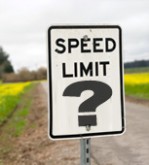 Driving is fast paced. There is a lot going on around your vehicle that needs to be taken into account. That’s why speed limits are important. They tell us a safe speed to travel at in a given area. However, sometimes even the posted speed limit is not safe. This is where the Basic Speed Law comes into effect. The Basic Speed Law tells us to not drive faster than is reasonable and prudent under the current conditions. That means you need to take into account everything going on in your driving environment and decide what the safest speed is. Otherwise, you could find yourself with a ticket.
 Today marks the close of 2015 National Work Zone Awareness Week which advised drivers to “Expect the Unexpected”. Road worker safety is always good to have in the forefront of your mind, especially in the coming summer months as road construction will undoubtedly increase. The main thing to remember when you see orange (signs, cones, and vests) along the road is slow down and drive more cautiously. Keep your focus on navigating through the changing lanes, speeds and road conditions. The smallest distraction could be disastrous. Obey the posted construction signs and workers giving you instructions. And if safety for all is not a good enough motivator, remember almost all states have larger fines for speeding and other traffic infractions in a construction zone.
 Part of making a legal and safe turn is ending the turn in the correct lane.
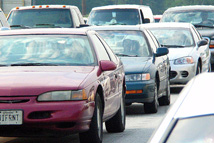

 It’s a brand new year and that means New Year’s Resolutions. Here are five driving decisions you can take to heart in the year ahead.
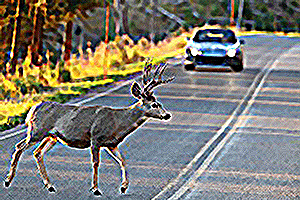 Animals on the road are always a possibility. Often, you see the animal too late and don’t have much room to maneuver. If you realize hitting an animal is going to happen, stay calm and avoid slamming on your brakes or swerving suddenly. This could lead to a serious traffic collision. If you strike an animal, attempt to find the owner. If the owner can’t be found, call the Humane Society or the local police department. Do not try to move or transport an injured animal, and never leave an injured animal to die.
 Right Side of the Road