Are You Street Smart?

See If You Can Name These Iconic Streets

America, the land of the beautiful. Nature’s paradise jam-packed with some of the most amazing landscapes and breathtaking architecture, many which include the very same streets you drive on. A lot of these streets, some right in your own backyard, in their own right have become famous from being idolized in movies, books, and songs, have made them not only iconic in history, but fascinating by all. So, just how many can you name?

Rodeo Drive
SIX: When you cruise down this well-known street, not only will you feel like a million bucks, but be prepared to spend a little as well. This three-block long drive is full of high end designer fashions, including: Giorgio Armani, Gucci, Yves Saint-Laurent, Jimmy Choo and so much more. A fashionistas dream! You can find some of Hollywood’s A-Listers shopping here, or surrounded by the millions of tourists who simply go just to stargaze.


BroadwayFIVE: The biggest and most famous theatre district in the United States. A lot of the big celebrities that can be found cruising down the street above have launched their Hollywood careers on this iconic block. There have been countless songs recorded about this street. It is the oldest north-south route through Manhattan. It is right up there along with other famous New York City streets, such as Park Avenue, Madison Avenue, and Fifth Avenue. While you’re there, be sure to catch a show or two.
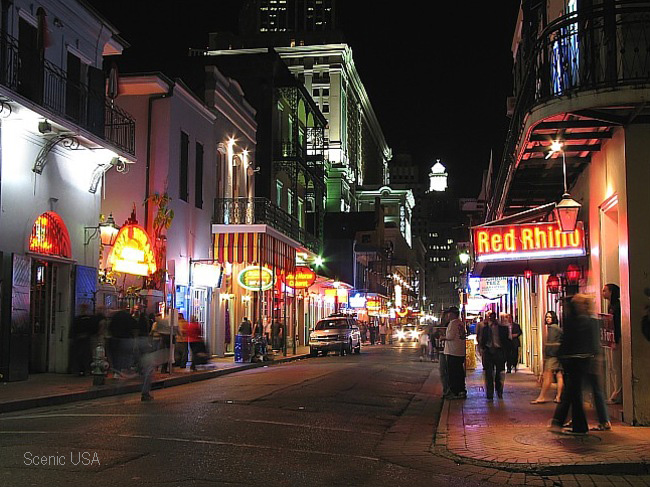

Bourbon StreetFOUR: On this famous street, the party never stops! It’s a major tourist attraction when visiting the oldest neighborhood in the French Quarter. The street is lined with buildings influenced by its French and Spanish culture, accompanied by bars, restaurants, and many other establishments to keep you entertained. This iconic street draws thousands of people from all over the world, especially during its annual celebration of Mardi Gras.


Wall StreetTHREE: Banks, stocks, and capitalism are just some of the words associated with this New York City street. This particular street has been famous since America’s earliest days. George Washington was inaugurated to the presidency here in 1789. It is about eight blocks long and features a bull statue guard. It is also the mecca of the New York Stock Exchange.


Lombard StreetTWO: This famous street located in the heart of San Francisco is known as the “crookedest” street in the world. It is one of the Bay Area’s prime tourist attractions, featuring a 16 percent grade and eight unbelievably wild turns. Originally, it was a 27 percent grade, which made it impossible for motorists to drive down. Today, it has become one of the most must do drives in the world!


View from the roof of Market SquareONE: Lastly, this street just might be the most famous street in the world because it is home to the most famous address in the country. This street is a must see attraction and just about everyone who visits has to at least get one photo opt here. This avenue runs approximately 6 miles and features some of the most important buildings in our nation’s history. However, due to the high importance of this street, a part of the avenue is closed off to traffic.


6) Rodeo Drive 5) Broadway 4) Bourbon Street 3) Wall Street 2) Lombard Street 
1) Pennsylvania Avenue
NHTSA Goes Mobile

How Safe Is The SaferCar App For Your Mobile Device?

safercar-app

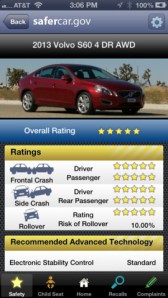
Most car shoppers would say that safety is at the top of their list when purchasing a vehicle for themselves, or perhaps even for a new driver in the family. However, with so many different types of vehicles manufactured and new safety features constantly being invented, you almost have to do an extensive investigative search on the vehicle you’re buying just to make sure it’s the right one. Aware of this, the U.S. Department of Transportation’s National Highway Traffic Safety Administration released the SaferCar app for mobile iOS devices, such as iPhones and iPod Touches. This real-time app allows anyone who downloads the feature access to crash test ratings, recalls and reviews (good and bad) on particular vehicles, the option to file a vehicle safety complaint, as well as the ability to search 5-Star Ratings for vehicles by make and model. It can also be used to scan a vehicle’s VIN, which can alert you to news and recall notices. In addition, for those new parents or babysitters out there, the app can also help with the proper installation of child safety seats by directing users to the nearest fire or police station and other entities that can assist. Not only does this smartphone app makes sense because we live in such a technologically driven society where most of our noses are spent buried in our phones, but it also provides important and vital information right at your fingertips, not to mention…it’s free! “This app takes advantage of the latest technology to ensure that consumers have the real-time information they need to buy safe, drive safe and stay safe,” said U.S. Transportation Secretary Ray LaHood.

Although the SaferCar app is only compatible with the iPhone and iPod Touch devices, development is also underway for a version compatible with Android devices. “Safety is our highest priority, and we’re always working to find new and better ways for people to access SaferCar, one of the most popular programs on our website,” said U.S. Transportation Secretary Ray LaHood. He went on to say, “This app takes advantage of the latest technology to ensure that consumers have the real-time information they need to buy safe, drive safe and stay safe.”

The launch of the NHTSA app is part of an ongoing effort by the U.S. Department of Transportation’s National Highway Traffic Safety Administration to make it easier for consumers to access and submit information about important vehicle safety concerns. According to NHTSA Administrator David Strickland, “Timely, accurate, and accessible safety data is the lifeblood of our agency’s work. The new SaferCar app literally puts the latest in vehicle safety information directly in the hands of consumers so they can make the appropriate purchasing and other decisions for themselves and their families.”

So just how safe is the new SaferCar App for your mobile device? Extremely! Easy access data and all that you need to know from the National Highway Traffic Safety Administration regarding your vehicle is available to you anytime of the day, anywhere, and always at your leisure.

Your-Turn to U-Turn

No time to read a long-winded BLOnG? Welcome to the Three-Second-Stop mini-Blog.

Today’s Three Seconds: U-Turns

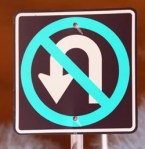
No U-turn?3 Second Stop
Unless you’re driving in a residential neighborhood (small side streets), you can only make a u-turn at an intersection. One exception: Never in front of a firehouse. Well, actually two more exceptions: Only when safe to do so and you can see clearly for 200 feet.

Now you know.

What Does Your Vehicle Say About You?

Did you know that the kind of car you drive can often be associated with your personality type?  When you purchase or pick out a vehicle to your liking, the end result is a choice you made, reflecting your personality.  Psychology expert, Dr. Leon James states that “in our car culture, drivers idealize their rides and even lend them human qualities.”  These human-like qualities are often linked to the kind of person you are or the type of person you aspire to be.  Many car owners even go as far as personalizing their vehicle by giving them names and talking to them, in addition to purchasing car products that give other drivers a clue into what the owner is like.  Car owners look for features that resemble themselves.  According to James, “People construct an ideal in their mind of the perfect car, and those attributes are transferred to its driver as well.”  The size, shape and power of your car are all indications of the type of person you are and the image you want to portray.

Some even believe that the color of your vehicle is another indicator of your personality.  For example, because red is often associated with speed and dangerous behavior, the myth is that police are more likely to pull you over and that you are a bit of a rebel.  Peacefulness and serenity is conveyed by drivers who drive white and neutral color cars.  Black vehicles project a more sinister persona.  While green and blue cars often signify fun-loving or friendly drivers.

So, which vehicle personality type are you?

Convertibles & Sports Cars?

Convertibles and Sports cars are for the daring and adventurous risk takers.  They are for the impulsive types who love living life to the fullest in the fast lane.  Case studies have shown that people who drive these types of vehicles are also avid fans of high adrenaline activities such as, bungee jumping, skydiving or parasailing. Most men who drive convertibles or sports cars drive to be seen.  They tend to want to impress others.  However, one of the biggest personality traits of someone driving a sports car is a longing to feel young, free and unattached.

SUV’s / Minivans?

People who drive SUV’s or Minivans are normally soccer moms or someone with a family, or in preparation for one.  It is said that people who drive big vehicles like to be in control.  SUV’s often suit the needs of a more brash, confident or powerful personality.

Sedans?

People who drive sedans tend to be very practical and have a more modest personality than owners of convertibles or SUV’s.  Sedans offer space, comfort and are better on gas than most other vehicles.  These vehicles also come in a variety of styles and appearances.

Eco-friendly Cars?

Driving an eco-friendly car, such as a hybrid or other cars which are good on gas, says that you truly care about the environment.  It also says that you like to save money and that you are good with budgeting.  People who drive eco-friendly cars have a very realistic view on life.

The New DUI: Driving While Intexticated

For as long as I can remember, there’s news almost daily about the tragic death(s) caused by an impaired driver. While the rate of fatal deaths due to DUI has actually been decreasing sharply over the last two decades, today’s drivers have seemingly chosen a new deadly form of DUI: Driving While Intexticated.
Texting while driving decreases reaction times.
Ironic in their nomenclature, smart phones are increasingly making drivers incredibly stupid. For the first time in history, drivers everywhere are making the conscious choice to drive several seconds at a time with their head down. This is no LOL matter.

Ponder this:

  • Compared to a 12% decrease of reaction time for buzzed drivers driving at the legal blood-alcohol limit, the reaction time of drivers texting while driving decreases by a whopping 35%. Intexticated drivers are almost 3 times slower to react that intoxicated drivers.
  • About 80% of drivers use their cell phones when on the road, and 60% of novice drivers between the ages of 18-24 own up to pounding away on an iPhone or Android keyboard while behind the wheel.

The Future of Crash Text Dummies

The Texting and Driving Dilema

So how will state governments wage war on drivers driving under the influence of text? No one is sure, but looking to the past may give us an idea. Decades ago, drunk driving was much more rampant per capita. In order to get the rate of drunk drivers under better control, concerned agencies used a two prong attack:

  1. Influence the public to perceive driving under the influence with harsher eyes (through PSA’s and in-school educational programs)
  2. Increase the punishment for those getting a DUI (steeper fines, revoking licenses, and longer jail time)

A similar strategy might have to be employed to thwart the increasing problems texting and driving is causing. The public perception campaign is already under way. Just search ‘Texting and Driving’ on Youtube and you’ll see what I mean. Though punishment has increased for those who choose to drive phone-in-hand, the common discipline is a slap on the wrist or an inexpensive citation. Will it take stiffer punishment to get drivers to leave the phone alone? Consider a common strategy used by high school teachers dealing with cell phones in the classroom – “Use it and Lose it”. Though an officer confiscating a phone because he saw you texting may seem overboard, I guarantee we’d see a lot more hands on 10 and 2 instead of on the QWERTY.

Sources: timesonline.co.uk, tennessean.com, iii.org, washingtonpost.com

Improving Driving With Age: Case Study

SleepingGetting older brings on many unwanted changes that can affect your life in a significant way. One being, a decline in your cognitive features. This waning limits your ability to perform certain tasks and functions that you were once able to do with ease. Restrictions such as these often lead to bad judgment and poor performance. And then that awaited moment occurs. The moment of the dreaded conversation. The one when your family members and loved ones urge you to stop driving, failing to realize that taking the keys away from an elderly person who has been driving all of their lives is not the easiest task, and for them can be quite a low point in life. There is almost always a protest and an unwillingness to do so. In fact, for the elderly, losing their driving privileges is ranked among the highest concerns with aging. Because of this, numerous cognitive training programs have been developed and instituted to help senior drivers improve not just cognition or driving ability, but both.

Through these programs, research has shown that:
1) older individuals can improve their visual attention as measured by neuropsychological test measures
2) older drivers’ cognitive deficits are a detriment to their ability to drive safely.

Stretch for Success

Stretch for Success


Researchers at MIT believe that exercise and health are both important factors that will help you drive longer and more safely, in addition to flexibility, coordination and strength. With funding help from The Hartford Insurance Group, MIT Age Lab was able to conduct a 10 week study monitoring 60-74 year olds, testing their strength, coordination, and agility through various methods, including video games and a variety of exercises. The video games method also tested for focus and range of motion. They were then tested in a lab measured by a high tech stimulator for pulse rate and eye movement reflexes. The benefits of this study taught participants how to stretch and move better, which in return will help when driving. For instance, the pretzel exercise helps with backing out easily, while a little bit of shadow boxing can help with getting in and out of the car easily. Lastly, the goalie skills exercise helped with lane changes and turns.

As a participant in MIT Age Lab’s study on senior drivers, 72 year-old Stanton Lyman hit the gym to see if more exercise could lead to sharper reflexes behind the wheel. Lyman went on the record stating, “’I definitely feel a looser quality to my ability to move.” Researchers also believe that drivers in their 30s and 40s shouldn’t wait until they hit ‘senior” status to start thinking about improving their flexibility and movement because it can help with tricky moves like parallel parking.

In a nutshell, if drivers take responsibility for improving driver safety at an early age, it will lead to safer driving as they get older. A little more time in the gym could be the key to a little more time on the road.

Drive as I Say, Not as I Do

Are You The Reason For Your Teen’s Bad Driving Habits?

Monkey See, Moneky Do

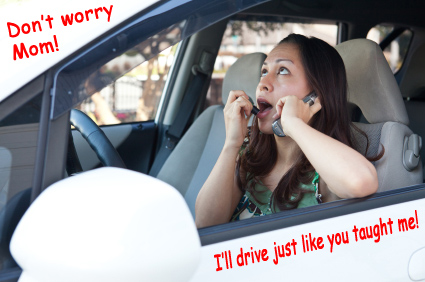
As a parent of a new teen driver, your hopes are that they learn proper defensive driving techniques, while you continue to drill in the “Do’s and Don’ts” of the road, as well as bringing about safety awareness. However, what we fail to realize is that our teenagers are soaking up these life-long lessons by mimicking that in which they see, most times, that which is you! Adult drivers holding on to bad driving habits are complacent, and might not keep up with recent changes in the law. But don’t knock yourself down just yet. In most cases, adults aren’t even aware of these bad driving habits which in turn impact their teens without even realizing the reason behind it.

The most common mistake among adult drivers is thinking you know it all. Because of the experience and the amount of years behind the wheel, most adults feel as if they are immune from any danger on the road. This could not be further from reality. Truth be told, accidents occur, and even if you have never been in or caused an accident before, it could still happen to you, perhaps caused by the at-fault novice driver.

Another mistake teens see their parents doing while behind the wheel is failing to use blinkers for signaling. We don’t need to get into the specifics on just how dangerous not signaling can be, despite its simplicity and readily accessible location, but let’s just say that it should be one of the most used features on your vehicle and without it not only causes much confusing, but a lot of collisions as well. I mean how exactly do you expect to teach your children the proper way to drive, when you yourself is not obeying a traffic law as simple as this?

According to CNN, a survey of over 1,700 teens admitted that they had performed risky activities, such as speeding, talking or texting on their cell phones, or not wearing their seat belts while operating a motor vehicle. The study also found that more than half of those teenage drivers had observed their parents engaging in similar behaviors while driving. Dave Melton, a driving safety expert with Liberty Mutual, stated that, “These findings highlight the need for parents to realize how their teens perceive their actions.” He also added, “Your kids are always observing the decisions you make behind the wheel, and in fact have likely been doing so since they were big enough to see over the dashboard…You may think you only occasionally read a text at a stop light or take the odd thirty-second phone call, but kids are seeing that in a different way. Answering your phone once while driving, even if only for a few seconds, legitimizes the action for your children and they will, in turn, see that as acceptable behavior.”

Out of the 94% of teenage drivers who admitted to speeding, 88% claimed that they had witnessed their parents breaking the speed limit before. According to a survey conducted by Writer Suzanne Kate, 91% of teenagers said they had witnessed their parents talking on a cell phone while driving, with 78% confessing that they had texted while driving, while 59% of parents reportedly had done so. Shockingly, adults were more likely than their children to not wear seatbelts.

Bottom line, teens who engage in dangerous driving most likely learned their bad driving skills from their parents. Parents, not only is it your ultimate duty, but it is imperative that as adults you demonstrate good driving behavior from the very beginning so that new drivers understand that safe driving rules apply to everyone equally. It’s time to make a change. It starts with you! Your teen’s life just might depend on it.

Drive in the Rain? Use Your Brain.

Driving in the Rain

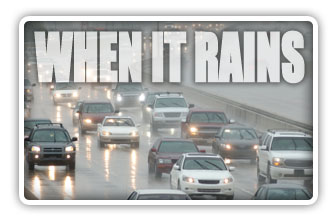
Unlike the popular 80’s song Blame it On the Rain, don’t. What did rain ever do to you besides water your garden and kind-of wash your car?? Though rain is blamed for a gazillion accidents each year, most of these fender-benders are preventable and not the rain’s fault at all. Rather, the true culprits of foul-weather flip-overs are un-brainy drivers failing to concede that they need to save their normal driving habits for another un-rainy day.

Here are a handful of wet-road-reminders for those days when the rain won’t go away:

  • Be very cautious when it first rains after a period of dry weather. Oil and grease gradually build up on the road and when it rainfall hits, your joyful ride can instantly turn into a not so fun slip and slide.
  • As they say, “When it rains, bad traffic pours.” You know traffic will be congested in inclement weather, so give yourself a few extra minutes to arrive safely to your destination.
  • Tailgating, is bad enough. Tailgating when the roads are slick? That’s just plain idiotic. Give yourself bigger space cushions with the cars ahead of you so you have more time to stop safely. Braking by slamming on the brake pedal will make your already rainy day even rainier.
  • Go ahead, show off! Yes, we want you to draw attention to yourself, really!! When it’s raining, everyone’s visibility is hampered. Remember to turn your headlights on (low beams please) and keep your windows defogged. Also, be on the lookout for cars without lights on, pedestrians, and other road hazards that might get lost in the rainy shuffle.
  • Unless you drive a hovercraft, the inner lanes of the road are probably your best bet. Most roads slope downward toward the curb where you’ll find those deep, hard to avoid puddles.
  • You cruise, you lose. If you hydroplane while using cruise control, your car may suddenly and abruptly speed up. Good luck to you When your tires return to the wet road at an accelerated speed. Hopefully you remembered to wear your seatbelt.
  • If your car does start to hydroplane, don’t freak out: jerking the wheel or hitting the brakes are BAD ideas! Instead, ease your foot off the gas and hold the steering wheel firmly until your car regains traction with the road.

What did we learn? Driving conditions will be less than ideal as long as raindrops keep falling on your hood. If you can, stay off the streets when the weather takes a turn for the wet. If you have places to go and people you must see, just remember that not all driving situations were created equal, and when it comes to wet roads, you need to carry yourself with a little extra common sense!

Distracted Kids Don’t Distract You

How To Survive A Mommy Road Trip

Kids Gone Wild Can Be a Real Distraction

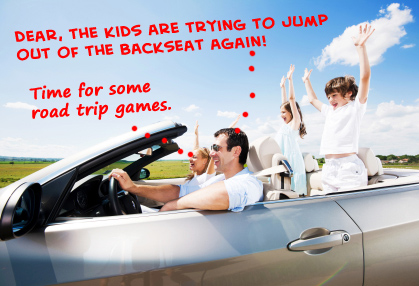
Although it is fact that new moms are among the top most distracted drivers in the country, it is also true that mothers of multiple children can become just as distracted as new moms, especially when it comes down to those road trips. Of course the idea of family vacays are wonderful, but let’s face it, they can be extremely long, and yes while family bonding time is the best time, it may not always go as smoothly as you dreamed it to be. You’re not alone. Mommies, we’ve all been there before. The destination ahead of you, while the kids bicker behind. The big debate: One Direction vs. The Wanted. Your six-year old asks repeatedly in the most intonation voice, “Are We There Yet?” while the youngest one screams in sheer agony for that 2pm feeding. The worst part, 90 miles left to the next rest stop. Enough to make any parent rethink the idea.

However, all can go really well if you take a few extra moments and develop a plan that will lessen your stress, causing you to focus more on the road. So for starters, make a checklist. Hey most of us have a ‘To Do List’ on a daily basis, so why not make one for the road? Aside from your luggage, maps and/or GPS, don’t forget your emergency car kit, which can come in handy in the event of the unfortunate. But, when traveling with children, you’ll want to make sure that you have plenty of distractions to keep them entertained while you navigate through the open roads. Snacks and beverages are a must! Hungry kids aren’t the happiest kids. Growling bellies lead to complaints and whines, which lead to growling mommies. Especially with little ones under the age of five, prepare bottles, treats and schedule your rest stops according to feedings and diaper changes. No one, including baby wants to be around if you don’t. Trust me!

Furthermore, one of the absolute most important things you need to have on your road trip is…entertainment! A bored child will surely let you know, and without anything to do, they will begin to ask you every question under the sun, making a one-hour trip seem like a cross country adventure. However, when packing games for the road, make sure the activities you bring along don’t create so much noise that your children distract and hinder the driver.

So we thought we’d share with you five of our favorite travel games to keep your little ones entertained…and you alert. Happy Traveling!

Rock, Paper, Scissor: a classic game for all ages, but most importantly, doesn’t require any board games or small pieces to pack. Your hands are all you need to enjoy hours of fun!

Memory: choose a name that begins with any letter of the alphabet. The next player has to repeat the previous name, followed by a new name of choice, beginning with the same letter, and so on to the next player. With so many topics and letters to choose from, you could literally spend the entire trip engulfed in this game.

I Spy: who doesn’t love a good game of I Spy? One person chooses an object around them. He or she then gives the other people in the car a clue by saying: “I spy with my little eye, something…” until the object is named. One of the best travel games ever!

Spelling Bee: parents can get involved in this one too! Not only will your child have a fun time spelling, but they will also enjoy learning new words in the process.

The Banana Game: a pretty simple game, but tons of fun! The color yellow is a rarity in vehicles, so be the first person to spot a passing yellow automobile. The more you see, the more points you’ll receive. The person with the most points wins.

Taking some of the ‘ick’ out of Ticket

No time to read a long-winded BLOnG? Welcome to the Three-Second-Stop mini-Blog.

Today’s Three Seconds: Traffic Ticket Control

Speeding Ticket3 Second StopTraffic Tickets: You dread them. There’s the humiliation of being pulled over, the steep ticket fine, your tarnished driving record, and increased car insurance rates. Fortunately, most states will allow you to take a Defensive Driving or Traffic School class to ‘hide’ your citation from the public and your insurance company, saving your insurance rates from skyrocketing. Not necessarily a reason to celebrate, but fixing your ticket will no doubt alleviate some of the financial burden of getting pulled over.