Slip Risk

No time to read a long-winded BLOnG? Welcome to the Three-Second-Stop mini-Blog.

Today’s Three Seconds: Freshly Wet Roads
3 Second Stop
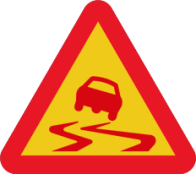
As you may already know, wet roads require extra care when driving. However, were you aware that many roads are the most slippery when it first starts to rain, particularly if it hasn’t rained in a long time? When rain first begins to fall, the accumulated oil on the road will be loosened and mixed with the water, making it even slicker than after it has been raining for a while.

Lights Out

No time to read a long-winded BLOnG? Welcome to the Three-Second-Stop mini-Blog.

Today’s Three Seconds: Traffic Signal Blackout

3 Second StopIf a power outage occurs and all the traffic signals are not working properly, proceed with caution and handle the intersection as you would an intersection with All-Way STOP signs. Remember your right of way protocol. If you and another vehicle on a cross street arrive at the intersection at the same time, then the vehicle on the left must let the vehicle to the immediate right go first.

Save Gas… Check Your Tires

No time to read a long-winded BLOnG? Welcome to the Three-Second-Stop mini-Blog.

Today’s Three Seconds: Proper Tire Inflation

3 Second StopKeeping your tires properly inflated will save you money. The average vehicle will get three to four miles more per gallon when the tires are properly inflated. By checking the pressure of your tires regularly, about once a week, you’ll not only reduce the chances of a blowout, you’ll also save money at the gas pump. Proper tire maintenance is one easy way to reduce greenhouse gas emissions, cut your vehicle’s fuel consumption, and lower the risk of an accident, all at the same time. It’s simple, economical, environmentally friendly and smart.

Know Where to Turn

No time to read a long-winded BLOnG? Welcome to the Three-Second-Stop mini-Blog.

Today’s Three Seconds: Turn Lane Selection

3 Second StopPart of making a legal and safe turn is ending the turn in the correct lane.
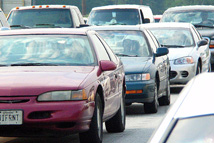
If you are making a right turn, start the turn in the right-most lane and stay in the right lane until you have finished your turn.

If you are making a left turn, start the turn in the left-most lane. You may turn into any available lane if it is safe to do so, but note, if vehicles are also turning right onto the same road, they have the right-of-way into their corresponding lanes.

Intersection Etiquette

No time to read a long-winded BLOnG? Welcome to the Three-Second-Stop mini-Blog.

Today’s Three Seconds: Gridlock

3 Second StopDriving in the city has many hazards including traffic. Heavy traffic can lead to gridlocked intersections. As frustrating and tedious as it is to have a green light and no room to move, remember that legally you cannot enter an intersection if you are not able to completely cross before the light turns red. In other words, being stopped in an intersection is a big no-no. The best thing to do in this situation is stay calm and wait your turn safely behind the crosswalk.

911

No time to read a long-winded BLOnG? Welcome to the Three-Second-Stop mini-Blog.

Today’s Three Seconds: Emergency Vehicles

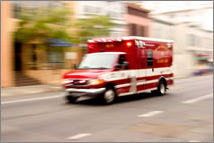
3 Second StopWhen an emergency vehicle is approaching with its siren blaring and at least one red light flashing, you must pull over to the right and stop. Just remember to never stop in an intersection. If you are already in the intersection, continue through the intersection and drive to the right as soon as it is safe and stop. If the road is so full that you cannot pull to the right, then you should just stop where you are. The emergency vehicle will go around you.

Steer Clear

No time to read a long-winded BLOnG? Welcome to the Three-Second-Stop mini-Blog.

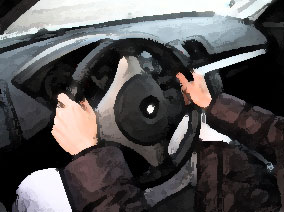
Today’s Three Seconds: Correct Hand Placement

3 Second StopGrowing up you may have learned that “10 and 2” was the proper hand placement on the steering wheel. With the advent of airbags, it is now recommended that you hold the wheel at 9 and 3 o’clock or a little lower at 8 and 4 o’clock. This position gives you control of the vehicle and reduces the risk of hand and arm injury in the event the airbag deploys.

Too Close for Comfort

No time to read a long-winded BLOnG? Welcome to the Three-Second-Stop mini-Blog.

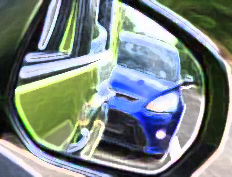
Today’s Three Seconds: Tailgating

3 Second StopTailgating is the #1 cause of rear-end collisions. Also, following too closely is the #1 cause of collisions on the freeway. That’s why it is essential to leave plenty of space between you and the car ahead of you. Riding someone’s bumper is not only rude, it is also dangerous. There is no good reason to ever engage in tailgating so just don’t do it!

New Law Alert

No time to read a long-winded BLOnG? Welcome to the Three-Second-Stop mini-Blog.

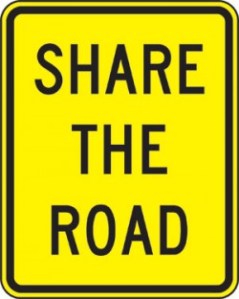
Today’s Three Seconds: Three Feet for Safety Act

sharetheroad3 Second StopAs of September 16, 2014, the Three Feet for Safety Act (California Vehicle Code 21760) went into effect. This law concerns motorists sharing the road with bicyclists. If you are in a motor vehicle traveling the same direction as a bicyclist, you may not pass the bicyclist “at a distance of less than three feet between any part of the motor vehicle and any part of the bicycle or its operator.” If it is not safe to pass a bicyclist due to the traffic or road conditions, be sure to slow down and follow at a safe distance until you are able to safely pass them. If you fail to follow this new law, you could be fined $35; and if a collision occurs “causing bodily injury to the operator of the bicycle” you could be fined $220.

It’s That Time Again…

No time to read a long-winded BLOnG? Welcome to the Three-Second-Stop mini-Blog.

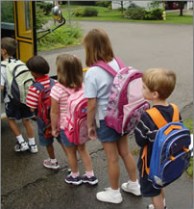
schoolbuskids_webToday’s Three Seconds: School Bus Safety

3 Second StopLaws vary by state, be sure to consult your local DMV for your state regulations. However in most states, when a school bus is stopped with red flashing lights to load or unload passengers, vehicles traveling in either direction are required to stop. They must remain stopped until the lights are no longer flashing. Generally the only exception is for traffic traveling in the opposite direction of the school bus on a road divided by a physical barrier.